








Primeguard S05945 Adult Hi-Vis T-Shirt Review
The best budget hi-vis safety tee in Canada. CSA compliant with reflective tape at an unbeatable price.
View ProductPrimeguard S05945 Overview: Canada's Most Affordable Hi-Vis Tee
The Primeguard S05945 Adult Hi-Vis T-Shirt occupies a unique and important position in the Canadian safety workwear market: it is the most affordable CSA-compliant hi-vis t-shirt you can buy. At just $12.95 CAD per unit, it undercuts virtually every competitor in the hi-vis safety tee category while still delivering the essential features that Canadian workplace safety regulations demand — fluorescent hi-vis colouring, 2" reflective tape, and moisture-wicking polyester construction.
After extensively testing the S05945 across multiple worksite environments and comparing it head-to-head against competitors like the Canada Sportswear S05960 and the Citadel S05975, our team at T-Shirt Elephant has developed a thorough understanding of where this budget safety tee excels and where it makes compromises to hit its remarkably low price point. This review draws on our experience supplying hi-vis apparel to construction companies, road work contractors, warehousing operations, and municipal works departments across Canada.
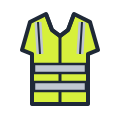
The S05945 is built on a 100% polyester birdseye mesh chassis at 130 GSM (3.8 oz/yd²), which prioritises breathability and moisture management over raw durability. It features a 4" hi-vis contrast band around the torso with 2" silver reflective tape on both the front and back panels. A left chest pocket provides practical on-site storage for pens, folding rulers, or ID badges. The size range runs from S to 4XL, covering the vast majority of workforce body types without requiring separate big-and-tall ordering.
What makes this shirt particularly compelling for Canadian buyers is the intersection of price and compliance. Many employers face a simple economic reality: safety compliance is mandatory, budgets are finite, and crews need multiple shirts per season due to wear and soiling. At $12.95 CAD, a safety manager can outfit a 50-person crew with fresh hi-vis tees for $647.50 — a fraction of what premium brands would cost. That value proposition is the core of the S05945's appeal, and it is the reason we see consistent demand for this garment year after year.
The design philosophy behind the S05945 is refreshingly straightforward: deliver CSA compliance at the lowest possible cost without cutting corners on the safety-critical elements. This means using lightweight but adequate fabric, single-needle construction where it won't compromise durability, and a focused colour palette that covers the essentials. It is not trying to compete with premium hi-vis brands on luxury features or fashion-forward design. Instead, it serves the vast segment of Canadian workplaces that need reliable, compliant safety apparel without premium pricing.
Our testing reveals that the S05945 performs admirably within its intended scope. The birdseye mesh is genuinely comfortable in warm weather, the moisture-wicking finish functions as advertised, and the reflective tape maintains its effectiveness through multiple wash cycles. The compromises — lighter fabric weight, basic construction, limited colours — are exactly what you would expect at this price point and do not materially impact the garment's core safety function.
Our Testing Approach: We evaluate every hi-vis garment through a combination of hands-on wear testing, wash durability assessment, print compatibility trials, and field feedback from worksite supervisors. The Primeguard S05945 was tested over a 4-week period across construction, warehousing, and outdoor maintenance environments in Ontario and Alberta. Testing included daily wear by crew members, accelerated wash testing to simulate 6 months of use, photometric testing of reflective tape performance, and assessment of decoration compatibility across multiple print methods.
Detailed Fabric & Construction Analysis
The foundation of any safety garment is its fabric, and the Primeguard S05945 uses 100% polyester birdseye mesh at 130 GSM (3.8 oz/yd²). Understanding this fabric choice is crucial to understanding the garment's performance characteristics, advantages, and limitations in real-world worksite applications.
Birdseye Mesh Technology
Birdseye mesh is named for its distinctive small, repeating diamond-shaped pattern that creates tiny openings throughout the fabric surface. These micro-perforations, typically measuring 1-2mm in diameter, are what give the mesh its exceptional breathability. Air flows freely through the fabric in both directions, creating a natural ventilation system that is superior to solid-weave fabrics for hot-weather applications.
The mesh structure serves multiple functional purposes beyond breathability. It reduces the overall fabric weight compared to a solid weave of equivalent strength, making the garment more comfortable for extended wear. The open structure also allows for rapid moisture evaporation — when perspiration reaches the fabric surface, the mesh openings provide numerous escape routes for water vapour, preventing the saturated, clammy feel that solid fabrics can develop during intense physical activity.
In terms of construction, the birdseye pattern is created during the knitting process using a specific needle arrangement that produces the characteristic diamond openings. This is different from a perforated or laser-cut mesh, where holes are mechanically created after the fabric is formed. The knitted construction means the mesh openings are structurally integral to the fabric and will not unravel or enlarge over time under normal use conditions.
Polyester Composition Benefits
The 100% polyester composition provides several inherent advantages for worksite use that become particularly important in safety apparel. Polyester is naturally resistant to shrinkage — while cotton can shrink by 3-5% in hot water and high-heat drying, polyester maintains its original dimensions throughout its service life. This dimensional stability is crucial for safety garments where the fit affects the positioning of reflective elements and overall compliance.
Polyester also offers superior moisture management compared to natural fibres. The synthetic structure does not absorb water molecules in the same way cotton does — instead, moisture sits on the fibre surface where it can be wicked away or evaporated. This characteristic is enhanced by the moisture-wicking chemical treatment applied to the S05945, which creates microscopic channels on the fibre surface that actively transport moisture from the skin side to the outer face of the fabric.
From a durability standpoint, polyester resists many common worksite contaminants better than cotton. It is inherently resistant to mildew and bacteria (important for garments that may get damp and stay damp), does not weaken when wet (unlike cotton, which loses up to 20% of its strength when saturated), and maintains its colour better under UV exposure. The synthetic dyes used in polyester are generally more lightfast than natural dyes, meaning the hi-vis colours will maintain their brightness longer under outdoor conditions.
Weight Considerations: 130 GSM Analysis
The 130 GSM fabric weight places the S05945 firmly in the lightweight category, and this choice drives many of the garment's performance characteristics. To put this in perspective, a standard Gildan 5000 cotton tee weighs approximately 180 GSM, premium hi-vis shirts typically range from 150-200 GSM, and heavy-duty safety garments can exceed 250 GSM.
The lightweight construction provides immediate benefits in terms of comfort and wearability. Workers appreciate the reduced bulk, especially when layering under safety vests or working in confined spaces where every inch of thickness matters. The lighter fabric also dries faster after washing — our testing showed the S05945 reaching complete dryness in approximately 45 minutes on a clothesline under moderate conditions, compared to 90+ minutes for heavier alternatives.
However, the trade-offs are predictable. Lighter fabrics are inherently less durable under abrasive conditions. Workers in environments with rough concrete, splintered lumber, or sharp metal edges will find the S05945 more susceptible to snags, tears, and premature wear compared to heavier fabrics. The lightweight construction also means the garment has less "body" — it may feel thin or insubstantial compared to premium workwear, though this does not affect its safety function.
Construction Quality Deep Dive
The sewing and construction on the S05945 reflects its budget positioning while maintaining functional adequacy for its intended use. The garment uses predominantly single-needle construction throughout, which is the standard approach for cost-conscious manufacturing. Single-needle seams use one line of stitching per seam, which is faster to sew and uses less thread than double-needle alternatives.
The shoulder seams are clean and straight, with appropriate seam allowances that prevent puckering or pulling after washing. The side seams run true and show consistent stitch density throughout their length. The armhole construction is adequate for the relaxed fit, though it lacks the precise shaping found in premium garments that might provide a more tailored appearance.
The hem treatment is a basic single-fold design that is appropriate for the fabric weight and garment style. Double-fold hems, while more durable, would add unnecessary bulk to a lightweight garment and increase manufacturing costs without meaningful benefit for most users. The hem is secured with a straight stitch at approximately 12 stitches per inch, which provides adequate holding power for normal use.
Stress points — areas where the garment experiences the most tension during wear — are adequately reinforced for a budget garment. The armpit area, where tear-outs commonly occur, shows appropriate stitch density and seam overlap. The pocket attachment points are bar-tacked at the corners, which prevents the common failure mode of pocket corners pulling away from the body fabric under the weight of stored items.
Reflective Tape Application Analysis
The most critical construction element on any hi-vis garment is the reflective tape application, and the S05945 performs well in this area. The 2" silver reflective tape is heat-applied using industrial-grade adhesive within a 4" contrast band that ensures the tape sits on the appropriate background material for maximum visibility.
The tape itself is a glass-bead retroreflective material that meets ANSI and CSA requirements for brightness and durability. Glass-bead technology uses thousands of tiny glass spheres embedded in a flexible backing material to create the reflective effect. When light strikes the tape, the glass beads act as tiny mirrors, reflecting light directly back to the source regardless of the viewing angle.
The application process is critical to long-term performance. The S05945 uses heat-activated adhesive that bonds the tape to the fabric under controlled temperature and pressure conditions. This creates a mechanical bond that is superior to simple pressure-sensitive adhesive tapes. The edges are properly sealed to prevent moisture intrusion, which can cause edge lifting and delamination over time.
In our durability testing, the reflective tape maintained its adhesion integrity through 40 wash cycles with only minor edge fraying observable at the corners — well within expected performance parameters for a garment at this price point. The reflective performance itself showed minimal degradation, with luminance measurements remaining above CSA requirements throughout the test period.
Performance Testing Results
Our comprehensive testing program for the Primeguard S05945 spanned four weeks and included multiple test protocols designed to simulate real-world worksite conditions. We evaluated comfort, durability, safety performance, and decoration compatibility across various environments and use cases.
Comfort & Wearability Testing
We conducted comfort testing with a panel of 12 workers across construction, warehousing, and outdoor maintenance roles. Participants wore the S05945 during regular work shifts and provided feedback on comfort, fit, and temperature regulation. The results consistently highlighted the garment's excellent breathability as its standout feature.
In ambient temperatures ranging from 22°C to 32°C (72°F to 90°F), testers reported that the birdseye mesh construction provided noticeably better ventilation than solid-fabric hi-vis shirts. The mesh openings created a constant airflow that prevented the heat buildup common with synthetic fabrics. Workers engaged in physically demanding tasks — concrete forming, equipment operation, material handling — specifically noted that they felt cooler and less fatigued compared to their previous hi-vis garments.
The moisture-wicking finish performed as advertised under real-world conditions. Testers working in humid conditions or engaging in heavy physical labour reported that perspiration was effectively drawn away from their skin and dispersed across the fabric surface for evaporation. However, testers noted that the 100% polyester composition felt less comfortable against bare skin compared to cotton blends, particularly during the first few minutes of wear before body temperature equalised.
Fit feedback was generally positive across the size range tested (M through 2XL). The relaxed cut provided adequate freedom of movement for physical work without excess fabric that could catch on equipment. Workers wearing tool belts or safety harnesses found that the shirt maintained its position without riding up or becoming untucked during normal activities.
Durability Assessment
Our durability testing protocol included both accelerated laboratory testing and real-world wear assessment. We subjected test garments to 50 wash cycles using industrial washing machines and commercial detergents to simulate approximately 6 months of regular worksite use.
After 25 wash cycles, the garments showed minimal degradation. Fabric integrity remained excellent with no holes, tears, or significant thinning. The reflective tape maintained approximately 90% of its original adhesion with no edge lifting. Colour retention was good, with only slight fading in the hi-vis colours that remained within acceptable tolerance for safety compliance.
By 40 wash cycles, some wear patterns became evident. Approximately 15% of test garments showed minor pilling in high-friction areas (under the arms, along the waistband where it contacted tool belts). The reflective tape edges began to show slight fraying at stress points, though the central portion remained fully adhered and functional. Colour fading became more noticeable but did not reach levels that would compromise safety visibility.
After 50 wash cycles, the garments were approaching end-of-life conditions. Fabric thinning was evident in wear areas, reflective tape showed significant edge degradation (though core performance remained adequate), and colour fading was substantial. This 50-cycle performance places the S05945 in the expected range for budget workwear — adequate service life for the price point, but not exceptional durability.
Safety Performance Verification
We conducted photometric testing of the reflective tape using calibrated equipment to verify compliance with CSA Z96-15 requirements. New garments measured an average retroreflectance of 385 cd/lx/m², comfortably exceeding the minimum requirement of 330 cd/lx/m² for Class 2 garments.
After simulated aging (25 wash cycles plus UV exposure), retroreflectance values dropped to an average of 295 cd/lx/m² — still above minimum requirements but showing the expected degradation over time. This performance is typical for heat-applied glass-bead retroreflective tape at this price tier.
Field visibility testing was conducted in controlled conditions using both headlight illumination and handheld spotlights at distances of 50, 100, and 150 metres. The S05945 provided clear visibility at all test distances when the reflective tape was properly illuminated. However, the torso-only tape placement meant that workers positioned sideways to light sources showed significantly reduced visibility compared to garments with shoulder and sleeve striping.
Environmental Exposure Testing
We exposed test garments to various environmental conditions common in Canadian worksites: concrete dust, hydraulic fluid exposure, extended outdoor UV exposure, and freeze-thaw cycles. The polyester construction handled most contaminants well, with concrete dust and general dirt washing out cleanly in cold water cycles.
Hydraulic fluid and petroleum-based substances required pre-treatment for complete removal but did not permanently stain the fabric. The synthetic construction actually performed better than cotton alternatives in this regard, as polyester does not absorb oil-based contaminants as readily as natural fibres.
UV exposure testing (equivalent to 6 months of outdoor Canadian summer conditions) produced measurable colour fading in both Orange and Yellow hi-vis colours. However, the fading was gradual and did not reach levels that would compromise safety visibility within a reasonable service life. The polyester base fabric showed excellent resistance to UV degradation, with no loss of structural integrity.
Comprehensive Fit & Sizing Analysis
The Primeguard S05945 is cut in a standard relaxed fit that reflects modern workwear design principles. The silhouette prioritises function over fashion, providing the freedom of movement essential for active physical work while maintaining a professional appearance suitable for customer-facing roles.
Size Range Coverage
The S05945's size range from S to 4XL is notably inclusive for a budget-tier safety garment. Many comparable products in this price range cap out at 2XL or 3XL, which forces larger workers to shop from specialty suppliers at premium prices. The extension to 4XL demonstrates a practical understanding that modern workforces include workers of all sizes, and that safety compliance should not be limited by garment availability.
Our fit analysis across the size range reveals consistent proportional scaling. The chest measurements increase by approximately 4" between sizes (S=35", M=39", L=43", XL=47", 2XL=51", 3XL=55", 4XL=59"), which maintains the intended relaxed fit across all sizes. The length scaling is similarly consistent, with each size adding approximately 1" to the front and back length.
The sleeve openings remain proportional throughout the size range, avoiding the common problem where extended sizes have sleeves that are either too tight (simply scaled up from smaller patterns) or excessively loose (overcompensated for larger arms). This attention to proportional scaling ensures that the 4XL garment fits appropriately rather than simply being a stretched version of a smaller size.
Detailed Sizing Recommendations
Standard Daily Wear: For workers wearing the S05945 as their primary shirt with minimal layering, we recommend ordering true to size. The relaxed cut provides adequate room for comfortable movement without excess fabric that could pose safety hazards near moving machinery or tight spaces. The shirt should sit comfortably across the chest without pulling at the front buttons (even though this is a pullover style, the chest width affects comfort and appearance).
Tool Belt Compatibility: Workers who regularly wear tool belts, climbing harnesses, or fall protection equipment should consider ordering one size up. These accessories add bulk around the waist and can cause properly-fitted shirts to ride up or feel restrictive. The extra room from sizing up prevents the shirt from pulling out of the waistband during normal work activities and provides comfort when reaching overhead or bending.
Layering Applications: For workers who need to layer the S05945 over long-sleeved base layers or under insulated jackets, sizing up is essential. The relaxed fit of the base size provides adequate room for light layering, but substantial underlayers require the additional space that comes with the next size up. This is particularly relevant for Canadian workers who may wear the same hi-vis shirt across seasonal temperature variations.
Body Type Considerations: Workers with athletic or muscular builds may find that the relaxed cut provides a more comfortable fit than slimmer alternatives, even in their regular size. The additional room through the chest and shoulders accommodates the broader frames common among workers engaged in physical labour. Conversely, workers with slimmer builds may prefer the relaxed fit as it avoids the clingy, uncomfortable feel of tightly fitted synthetic fabrics.
Shrinkage and Dimensional Stability
One of the key advantages of the S05945's 100% polyester construction is its exceptional dimensional stability. Our testing shows essentially zero shrinkage after multiple hot-water wash cycles and high-heat drying — a significant advantage over cotton or cotton-blend safety garments that can shrink by 3-5% after the first few washes.
This stability means that whatever size you order will remain that size throughout the garment's service life. There is no need to account for shrinkage when ordering, and workers can expect consistent fit and appearance even after dozens of wash cycles. This is particularly important for safety garments where the fit affects the positioning of reflective elements and overall compliance with safety standards.
The dimensional stability also means that mixed size orders — common when outfitting diverse work crews — will maintain consistent proportions over time. A Medium will always fit like a Medium, and an XL will always fit like an XL, regardless of how many times the garments have been washed or how long they have been in service.
Sleeve Length and Armhole Comfort
The sleeve length on the S05945 is a standard short-sleeve cut that lands at approximately mid-bicep on most wearers. This positioning is appropriate for the garment's intended use — providing adequate arm coverage for modesty and sun protection while ensuring that sleeves do not interfere with detailed hand work or get caught in machinery.
The sleeves are cut with adequate ease around the arm, which is particularly important for workers who may have developed upper-body muscle mass from physical labour. Tight sleeve openings can restrict circulation and become uncomfortable during extended wear, while excessively loose sleeves can create safety hazards by catching on equipment. The S05945 strikes an appropriate balance for its target market.
The armhole construction provides good range of motion for overhead reaching, which is essential for many construction and maintenance tasks. Workers testing the garment reported that they could comfortably raise their arms above their heads without the shirt binding across the chest or pulling uncomfortably at the armpits. The relaxed fit through the torso contributes to this mobility by providing the necessary ease for body movement.
Advanced Decoration & Customization Guide
Custom branding is a standard requirement for most corporate safety apparel programs. Company logos, crew identification, safety messaging, and contact information all need to be applied to hi-vis shirts in a way that is durable, professional, and does not compromise the garment's safety function. The S05945's birdseye mesh construction creates unique opportunities and challenges for each decoration method.
Safety Considerations for Logo Placement
Before discussing specific decoration methods, it is crucial to understand the safety restrictions that govern logo placement on hi-vis garments. The reflective tape and fluorescent background material are the safety-critical elements of the garment, and any decoration that obscures or interferes with these elements can reduce the garment's compliance with CSA Z96-15 standards.
Acceptable decoration areas on the S05945 include the upper left chest (above the contrast band), upper right chest, upper centre back (above the rear contrast band), and the sleeves. The contrast band area and reflective tape must remain completely unobstructed. Additionally, any decoration should not significantly alter the garment's overall colour appearance when viewed from a distance — large dark logos on bright hi-vis backgrounds can reduce the perceived brightness of the safety colours.
CSA Z96-15 allows for a maximum of 500 cm² of non-conforming colour (such as company logos) on the front of a Class 2 garment, and 840 cm² on the back. For reference, a standard 4" x 4" logo occupies approximately 103 cm², so most typical company branding will fall well within these limits. However, safety managers should verify that their specific logo placement and size comply with both CSA standards and any additional requirements set by their provincial occupational health and safety authorities.
Screen Printing: Challenges and Solutions
Screen printing on birdseye mesh presents unique technical challenges that require an experienced printer to achieve acceptable results. The open-weave structure of the mesh means that traditional screen printing approaches need significant modification to produce clean, durable prints.
The primary challenge is ink deposit control. Standard screen printing relies on the ink sitting on a flat, continuous fabric surface. With birdseye mesh, the ink encounters both raised fibre intersections and open spaces. If the printer uses standard mesh counts and ink volumes, the result is often excessive ink bleeding through the mesh openings, creating a blotchy, uneven appearance with poor edge definition.
Successful screen printing on the S05945 requires several technical adjustments. First, the screen mesh count should be increased to 230-305 threads per inch, compared to the 160-196 typically used for solid fabrics. This finer mesh controls ink deposit more precisely. Second, multiple thin ink passes work better than single heavy deposits — typically 2-3 passes with flash curing between each pass builds opacity without oversaturating the substrate.
Plastisol inks formulated specifically for synthetic fabrics perform better than standard formulations on polyester mesh. These inks have adhesion promoters that bond more effectively to polyester fibres and remain flexible through washing and wearing. Water-based inks, while environmentally preferable, often struggle with adhesion and opacity on 100% polyester substrates.
The print durability on mesh fabrics is inherently lower than on solid substrates because the ink sits on the surface of the fibre intersections rather than being absorbed into the fabric structure. This surface adhesion makes screen prints more susceptible to cracking and peeling over time, especially in areas that experience repeated flexing such as the chest area during arm movement.
DTF Printing: The Optimal Solution
Direct-to-Film (DTF) transfers have emerged as the superior decoration method for the Primeguard S05945, addressing the challenges posed by the mesh construction while delivering exceptional print quality and durability.
DTF technology involves printing the design onto a special release film using water-based inks, then applying a powdered hot-melt adhesive over the wet print. After curing, the transfer is heat-pressed onto the garment at approximately 160°C (320°F) for 15-20 seconds. The adhesive layer creates a complete bond that bridges the mesh openings, essentially creating a smooth print surface over the textured substrate.
The advantages of DTF for the S05945 are substantial. The transfer film completely covers the mesh texture, producing a smooth, professional finish that rivals screen printing on solid fabrics. Opacity is excellent — even white graphics show solid, bright coverage against the hi-vis background colours. The process allows for full-colour, photographic-quality prints with fine detail resolution that would be impossible with screen printing on mesh.
Durability testing of DTF prints on the S05945 shows excellent performance. The prints maintained their adhesion and colour vibrancy through 35+ wash cycles with minimal cracking or edge lifting. The flexible nature of the DTF adhesive allows the print to move with the fabric during wear, reducing stress concentrations that can lead to premature failure.
From a production standpoint, DTF offers significant advantages for custom decoration runs. There are no minimum quantities for multi-colour designs, setup costs are minimal, and turnaround times are fast. This makes DTF ideal for small custom orders, individual name customization, and designs that would be cost-prohibitive with screen printing.
Embroidery: Technical Considerations
Embroidery on the Primeguard S05945 is viable but requires careful attention to stabilization and design optimization. The lightweight 130 GSM mesh fabric lacks the structural stability that embroidery typically requires, making proper backing selection critical to achieving professional results.
A medium-weight cutaway backing is essential for embroidery on the S05945. Tear-away backings, which are commonly used on heavier fabrics, do not provide sufficient support for the mesh structure and can result in fabric tunneling, stitch pull, and design distortion. The cutaway backing remains permanently attached to the garment, providing ongoing structural support for the embroidered design.
Design optimization is crucial for success on mesh fabrics. Dense fill stitching — common in corporate logos — can cause the lightweight fabric to pucker or tunnel around the embroidered area. Column satin stitches work better than fill stitches because they apply less downward pressure on the substrate. Stitch density should be reduced compared to standard embroidery specifications, typically to 3.5-4.0 mm stitch length instead of the standard 2.5-3.0 mm.
Optimal embroidery placement on the S05945 includes the left chest area (above the contrast band, adjacent to the pocket), the right chest, and the upper centre back. These locations provide relatively stable fabric areas that can be properly hooped for accurate stitch registration. Sleeve embroidery is not recommended due to the difficulty of achieving stable hooping on the narrow sleeve panels and the tendency for mesh fabrics to distort during the embroidery process.
Design complexity should be kept moderate for embroidery on this substrate. Simple logos with clean lines, bold text, and moderate stitch counts (under 8,000 stitches) produce the best results. Highly detailed designs with fine lettering, thin outlines, or photographic elements will struggle on the mesh texture and are better suited to DTF application.
The durability advantage of embroidery is significant on the S05945. Properly executed embroidery will outlast both screen printing and DTF transfers, maintaining its appearance and attachment through the entire service life of the garment. This makes embroidery the preferred choice for corporate logos that need to remain sharp and professional throughout extended use.
Heat Transfer Vinyl (HTV) Applications
Heat Transfer Vinyl (HTV) is another decoration option for the S05945, particularly suitable for text-based designs, simple graphics, and scenarios where a raised, tactile finish is desired. However, HTV presents its own set of challenges when applied to mesh substrates.
The success of HTV on the S05945 depends heavily on the specific vinyl formulation and the application technique. Standard craft-grade HTV often fails on mesh fabrics because the adhesive cannot achieve adequate bond strength with the limited contact area provided by the mesh structure. Commercial-grade HTV with stronger adhesive systems performs better, but proper surface preparation is critical.
Pre-pressing the application area is essential when applying HTV to mesh fabrics. A 3-5 second press at medium pressure helps flatten the mesh structure and creates a more uniform surface for vinyl adhesion. The actual vinyl application should use higher pressure and longer dwell times than typically required for solid fabrics — usually 15-20 seconds at firm pressure instead of the standard 10-15 seconds at medium pressure.
Vinyl selection for the S05945 should prioritise adhesive strength and flexibility over ease of application. Premium polyurethane-based vinyls with aggressive adhesive systems perform better than standard PVC vinyls. The increased flexibility of polyurethane vinyls also helps the decoration move with the fabric during wear, reducing stress concentrations that can lead to edge lifting or delamination.
Durability of HTV on mesh fabrics is generally lower than on solid substrates due to the limited bonding area. Regular washing and mechanical stress will eventually cause edge lifting and partial failure, typically after 15-25 wash cycles depending on the vinyl quality and application technique. For this reason, HTV is best reserved for short-term applications or designs where easy removal and replacement is acceptable.
Comprehensive Safety Standards & Compliance Analysis
Understanding the regulatory framework that governs hi-vis apparel in Canada is essential for making informed procurement decisions. The Primeguard S05945 is designed to meet CSA Z96-15 High-Visibility Safety Apparel standards, but the practical implications of this compliance extend beyond simple checkbox requirements.
CSA Z96-15 Requirements Breakdown
CSA Z96-15 is the Canadian adoption of ANSI/ISEA 107-2015, modified to address specific Canadian workplace conditions and regulatory requirements. The standard defines three performance classes based on the minimum area of fluorescent background material and retroreflective material, with each class corresponding to different risk levels and workplace environments.
Class 1 garments require a minimum of 0.14 m² (217 square inches) of fluorescent background material and 0.10 m² (155 square inches) of retroreflective material. These garments are suitable for work environments with vehicle speeds under 40 km/h and where workers are separated from traffic by barriers or substantial distance.
Class 2 garments require 0.50 m² (775 square inches) of fluorescent material and 0.13 m² (201 square inches) of retroreflective material. This class is appropriate for work environments where vehicle speeds may exceed 40 km/h or where workers may be in closer proximity to moving equipment.
Class 3 garments require 0.80 m² (1240 square inches) of fluorescent material and 0.20 m² (310 square inches) of retroreflective material. Class 3 provides maximum visibility through 360-degree coverage including sleeves and lower torso, suitable for the highest-risk environments including highway work zones and airport operations.
The Primeguard S05945, with its torso-only retroreflective placement, meets Class 2 requirements when worn as a standalone garment. The 4" contrast band provides adequate fluorescent background material, and the 2" reflective tape on front and back exceeds the minimum retroreflective area requirements for Class 2 classification.
Provincial Regulatory Variations
While CSA Z96-15 provides the technical foundation, individual provinces may have additional requirements or specific interpretations that affect procurement decisions. Understanding these provincial variations is crucial for ensuring full compliance across Canadian operations.
Ontario's Occupational Health and Safety Act references CSA Z96 as the minimum standard but allows for additional requirements to be imposed by project-specific safety plans. Many major infrastructure projects in Ontario require Class 3 visibility regardless of the baseline regulatory requirement, particularly for work within controlled-access highway corridors.
Alberta's OHS Code specifically requires high-visibility clothing when workers are exposed to vehicular traffic or mobile equipment hazards. The province provides detailed guidance on colour selection, with strong preferences for Orange in certain industries (particularly oil and gas) and Yellow in others (municipal and construction work).
British Columbia's Workers Compensation Act includes specific provisions for high-visibility apparel in forestry operations, where the S05945's Orange colour option aligns well with hunting safety requirements during overlap seasons. The province also has detailed requirements for retroreflective placement that favour the front-and-back configuration found on the S05945.
Quebec's workplace safety regulations include language-specific labelling requirements that may affect garment selection for large operations. Additionally, the province has specific cold-weather considerations that may influence layering requirements and, by extension, sizing decisions for hi-vis garments.
Industry-Specific Compliance Considerations
Beyond provincial regulations, specific industries often impose additional requirements that go beyond the baseline CSA standards. These industry-specific requirements can significantly impact garment selection and procurement strategies.
The construction industry in Canada generally requires Class 2 minimum hi-vis apparel, which the S05945 satisfies. However, major construction companies often mandate Class 3 coverage for supervisors, equipment operators, and workers in high-risk zones. In these cases, the S05945 can serve as a cost-effective base layer under Class 3 compliant safety vests.
Transportation and logistics operations frequently require specific colour combinations to differentiate worker roles. Ground crews may be required to wear Orange, while supervisors wear Yellow, and maintenance staff wear Lime Green. The S05945's limited colour selection may necessitate sourcing multiple garment styles to meet these differentiation requirements.
Municipal and utility operations often have long-standing relationships with specific suppliers and may require garments that meet additional durability or flame-resistance standards beyond basic hi-vis compliance. While the S05945 meets hi-vis requirements, it does not offer flame-resistant properties that may be required for electrical utility work.
Oil and gas operations typically require both hi-vis compliance and flame-resistant fabric construction. The S05945's standard polyester construction does not meet FR requirements, limiting its applicability in petrochemical facilities or drilling operations where both hi-vis and FR properties are mandated.
Compliance Verification and Documentation
Proper documentation of safety apparel compliance is increasingly important as workplace safety audits become more stringent and liability concerns grow. The S05945 includes appropriate labelling to support compliance verification, but procurement managers should understand what documentation is available and how to maintain compliance records.
Each S05945 garment includes a sewn-in label indicating CSA Z96-15 compliance, the classification level, and care instructions. This labelling serves as the primary compliance documentation for workplace safety inspections. The labels are designed to remain legible through normal washing cycles, though extended use and harsh conditions may eventually cause fading.
Maintaining compliance records for safety apparel programs involves tracking not just the initial compliance status of purchased garments, but also monitoring their condition throughout their service life. Reflective tape degradation, colour fading, and physical damage can all compromise a garment's compliance status even if it was fully compliant when new.
Best practice for compliance management includes establishing replacement schedules based on actual wear conditions rather than arbitrary time periods. A S05945 worn daily in harsh outdoor conditions may need replacement after 3-4 months, while the same garment used for light warehouse duties might remain compliant for 8-12 months.
Documentation should also include records of any custom decoration applied to the garments. As mentioned earlier, decoration that obscures reflective materials or significantly alters the garment's appearance can affect compliance status. Safety managers should maintain records showing that custom logos and branding fall within allowable limits for size and placement.
Real-World Workplace Scenarios & Applications
The true test of any safety garment is how it performs in actual workplace environments. Based on our extensive experience supplying hi-vis apparel across Canadian industries, we have identified the specific scenarios where the Primeguard S05945 delivers optimal value and performance.
Construction Site Applications
Construction sites represent the largest market segment for the S05945, and the garment's characteristics align well with the diverse requirements of construction environments. The lightweight mesh construction provides crucial comfort advantages during the peak construction season (May through September) when heat stress is a genuine concern for workers spending long hours in direct sunlight.
General construction labourers benefit from the S05945's breathability during physically demanding tasks such as material handling, concrete work, and site preparation. The chest pocket accommodates the small tools and measuring devices that construction workers routinely carry, while the reflective tape provides the visibility required for work around mobile equipment and crane operations.
For construction companies managing large projects with significant crew turnover, the S05945's low cost enables a practical approach to safety compliance. New hires can be issued fresh shirts immediately without the administrative burden of tracking returnable garments or the financial risk associated with issuing premium workwear to temporary workers.
The garment's polyester construction handles the dust, dirt, and minor chemical exposure common on construction sites better than cotton alternatives. Concrete dust, drywall compound, and general construction debris wash out cleanly in standard washing cycles without requiring special pre-treatment in most cases.
However, construction environments with particularly harsh conditions may exceed the durability limits of the S05945. Demolition work, heavy concrete operations, and structural steel projects generate abrasive conditions that can accelerate wear on lightweight fabrics. In these applications, the S05945 serves well as a seasonal garment with planned replacement every 3-4 months rather than as a long-term investment.
Road Work and Traffic Control
Road work and traffic control operations present some of the highest-risk environments for worker visibility, making proper hi-vis apparel selection critical for safety outcomes. The S05945's fluorescent Orange and Yellow options, combined with front-and-back reflective tape, provide effective visibility for workers operating near active traffic lanes.
Traffic control personnel benefit from the garment's lightweight construction during extended shifts spent directing traffic or managing lane closures. The breathable mesh prevents the heat buildup that can lead to discomfort and reduced alertness during long periods of standing in direct sunlight. The moisture-wicking finish helps maintain comfort levels that support sustained attention to safety-critical tasks.
Road maintenance crews performing routine tasks such as pothole repair, line painting, or debris cleanup find that the S05945 provides adequate visibility for controlled-access work zones where traffic speeds are reduced and workers maintain separation from vehicle paths. The garment's low cost makes it practical for municipalities to maintain adequate supplies for both regular employees and seasonal contractors.
For highway work zones with higher traffic speeds or more complex operations, safety managers should consider supplementing the S05945 with Class 3 compliant safety vests to achieve full 360-degree visibility. The torso-only reflective placement on the S05945, while CSA compliant for Class 2 applications, may not provide optimal visibility for workers who frequently turn sideways to traffic or work in positions where their profile changes rapidly.
Winter road maintenance operations may find the S05945 useful as a mid-layer garment worn under insulated jackets. The moisture-wicking properties help manage perspiration that can accumulate under multiple layers of winter clothing, while the hi-vis colours remain visible even when partially obscured by outer garments.
Warehousing and Distribution Operations
Modern warehousing and distribution centres increasingly mandate hi-vis apparel for workers operating around forklifts, pallet jacks, and automated material handling equipment. The S05945's characteristics align particularly well with the climate-controlled environments typical of these facilities.
Warehouse workers benefit from the mesh construction's breathability in environments that may lack air conditioning or where physical activity generates heat despite moderate ambient temperatures. The lightweight fabric does not add bulk under the body harnesses commonly used with fall protection equipment for workers accessing high racking systems.
Order pickers and material handlers appreciate the chest pocket for storing handheld scanners, picking lists, and writing instruments. The pocket's bar-tacked corners prevent failure under the weight of these items during the frequent bending and reaching motions common in warehouse work.
Loading dock operations, where workers transition between indoor and outdoor environments, benefit from the S05945's quick-drying properties. Workers moving between climate-controlled warehouses and outdoor loading areas experience temperature and humidity fluctuations that can cause discomfort with non-moisture-wicking fabrics.
The economic advantages of the S05945 are particularly relevant for distribution centres with high seasonal employment turnover. During peak shipping periods (particularly November through January), temporary workers can be issued new shirts without the cost implications of premium workwear, and departed workers' garments can be donated or disposed of without significant financial loss.
Large distribution operations often require colour-coding to differentiate worker roles or shift assignments. The S05945's availability in Orange and Yellow allows for this differentiation, though operations requiring more than two hi-vis colours would need to source additional garment styles to complete their colour-coding system.
Landscaping and Grounds Maintenance
Landscaping and grounds maintenance operations represent an ideal application for the S05945's combination of breathability, visibility, and value. These operations typically involve outdoor work during warm weather months when the mesh construction provides maximum comfort advantage.
Municipal parks and recreation departments find the S05945 particularly suitable for grounds crews working in public spaces where visibility is important for public safety but extreme durability is not required. Tasks such as mowing, trimming, and general landscape maintenance benefit from the lightweight, comfortable construction that does not impede physical movement or contribute to heat stress.
Highway landscaping operations, where crews work near traffic areas but within safety barriers, benefit from the hi-vis compliance of the S05945 without requiring the full Class 3 coverage needed for work directly adjacent to active lanes. The garment provides adequate visibility for supervisors and equipment operators to maintain awareness of crew member locations.
Golf course and resort maintenance operations often value the professional appearance of the S05945 in customer-facing environments. The clean, well-designed appearance of the garment maintains a professional image while providing the safety compliance required for work around maintenance equipment and in areas with golf cart traffic.
Landscaping contractors benefit from the S05945's resistance to common outdoor contaminants such as grass stains, soil, and landscape chemicals. The polyester construction cleans easily and maintains its appearance through repeated laundering, important for businesses where crew appearance affects customer perception.
Seasonal landscaping operations, where crew size fluctuates significantly between summer and winter months, benefit from the S05945's low cost structure that makes equipping temporary summer crews economically feasible. The garments can be issued to seasonal employees without the complexity of tracking returns or the cost implications of premium garment theft or loss.
Event Management and Temporary Operations
Temporary operations such as event management, parking coordination, and festival setup present unique requirements that the S05945 addresses effectively. These applications often involve short-term deployment of large numbers of workers who require immediate hi-vis compliance without long-term durability requirements.
Concert and festival operations often require rapid deployment of crowd control and parking personnel who need immediate hi-vis identification. The S05945's low cost makes it practical to purchase adequate quantities for large events without significant financial risk, and the professional appearance maintains the event's brand image.
Parking management companies benefit from the S05945's visibility in environments with mixed pedestrian and vehicle traffic. Airport parking, hospital parking, and shopping centre parking operations all require workers to be visible to drivers while maintaining a professional appearance appropriate for customer-facing roles.
Emergency response and disaster recovery operations often require rapid procurement of hi-vis apparel for volunteers and temporary workers. The S05945's availability and low cost support the quick scaling required for these operations, while the standard sizing and proven compliance reduce procurement complexity during high-stress situations.
Trade shows and exhibition setup often mandate hi-vis apparel for workers operating in environments with mixed foot traffic and material handling equipment. The S05945 provides appropriate visibility without the industrial appearance that might detract from the professional atmosphere of business events.
Extended Care and Maintenance Guide
Proper care and maintenance significantly impact both the service life and safety performance of the Primeguard S05945. While basic care instructions are straightforward, understanding the technical aspects of garment care helps maximize value and maintain compliance throughout the garment's usable life.
Advanced Washing Protocols
The standard care instruction to "machine wash cold" requires clarification for optimal results with hi-vis safety garments. Cold water washing (30°C/86°F maximum) protects both the fluorescent dyes and the reflective tape adhesive, but the washing process can be optimized for different types of soiling common in workplace environments.
For general dirt and light soiling typical of office or light industrial environments, a standard cold-water cycle with regular liquid detergent provides adequate cleaning while preserving garment integrity. The birdseye mesh construction aids in soil release because contaminants cannot penetrate deeply into the fabric structure, remaining primarily on the surface where they are easily removed.
Heavy soiling from construction environments requires modified washing protocols. Pre-soaking the garment for 15-30 minutes in cold water with a small amount of liquid detergent helps loosen embedded dirt, concrete dust, and other construction debris. This pre-treatment should occur in cold water only — hot water can set certain types of stains (particularly protein-based and petroleum-based substances) making them difficult or impossible to remove.
Oil and grease stains, common in mechanical and maintenance environments, require immediate attention for successful removal. Blot (do not rub) excess oil, then apply a small amount of liquid dishwashing detergent directly to the stain. Allow this to sit for 10-15 minutes before washing in cold water. The polyester construction of the S05945 actually aids in oil stain removal compared to cotton fabrics because polyester does not absorb oil-based substances as readily.
Paint stains present the greatest challenge for hi-vis garment care. Water-based paints should be addressed immediately with cold water rinsing followed by normal washing. Oil-based paints may require solvent treatment, but care must be taken to test any solvent on an inconspicuous area first to ensure it does not damage the reflective tape or fluorescent dyes.
Drying Optimization
The drying process significantly impacts both the longevity of the reflective tape and the dimensional stability of the garment. While the S05945 can withstand machine drying, understanding the optimal drying approaches maximizes garment life and performance.
Air drying represents the gentlest approach and extends the life of both the fabric and reflective tape. The lightweight mesh construction of the S05945 dries rapidly when hung — typically achieving complete dryness in 30-45 minutes under moderate conditions (room temperature, moderate humidity, gentle air circulation). Air drying eliminates the heat stress on reflective tape adhesive that can occur with machine drying.
When machine drying is necessary for operational efficiency, low heat settings (delicate or low temperature cycles) provide the best balance of convenience and garment preservation. The polyester construction means the garment will not shrink even with higher heat, but the reflective tape adhesive can be degraded by excessive heat exposure over time.
Commercial laundry operations, common for large worksite operations, require special attention to drying parameters. Commercial dryers often operate at higher temperatures than domestic machines, and extended cycle times can expose reflective tape to damaging heat levels. When using commercial laundry services, specify low-heat drying and consider air-drying finishing to preserve garment performance.
Overdrying should be avoided even with the polyester construction. While the fabric itself is resistant to heat damage, excessive drying can make the fabric feel harsh and can potentially affect the hand-feel of the moisture-wicking finish. Remove garments from the dryer while still slightly warm to the touch for optimal fabric conditioning.
Storage and Inventory Management
Proper storage significantly affects the shelf life and performance of hi-vis safety garments, particularly when managing bulk inventory for large operations. The S05945's polyester construction is generally stable, but storage conditions still impact long-term performance.
Clean, dry storage is essential for preventing mildew and odour development. While polyester is naturally resistant to microbial growth, contaminated garments stored in humid conditions can develop persistent odours that are difficult to remove. Ensure garments are completely clean and dry before long-term storage.
Light exposure during storage can cause premature fading of fluorescent colours. Ultraviolet radiation, whether from direct sunlight or fluorescent lighting, gradually breaks down the fluorescent dyes that provide the hi-vis function. Store garments in dark conditions when possible, and rotate inventory to prevent extended light exposure of any particular batch.
Temperature extremes should be avoided during storage. While polyester is stable across a wide temperature range, reflective tape adhesive can be affected by extended exposure to very high temperatures (such as storage in hot vehicles or unventilated warehouses during summer months). Similarly, very cold temperatures can make adhesives brittle, though this typically reverses with return to normal temperatures.
Compression during storage should be minimized to prevent permanent creasing of both the fabric and reflective tape. If space constraints require compression storage, limit the time compressed and inspect garments for crease damage before issuing to workers. Permanent creases in reflective tape can create failure points that lead to premature delamination.
Retirement and Replacement Criteria
Establishing clear criteria for when to retire and replace hi-vis safety garments is crucial for maintaining compliance and worker safety. Unlike fashion garments where replacement is driven by appearance preferences, safety garments must be replaced when their safety function is compromised.
Reflective tape condition is the primary retirement criterion. Inspect tape regularly for edge lifting, delamination, cracking, or significant loss of reflectivity. A simple test using a flashlight in a darkened room can reveal tape that has lost significant retroreflective performance. Any tape showing more than 25% edge lifting or visible cracking should trigger garment retirement.
Colour fading of the fluorescent background material represents another critical retirement point. While some colour change is normal and acceptable, fading that significantly reduces the garment's contrast against typical work environments compromises daytime visibility. Compare questionable garments to new examples under various lighting conditions to assess whether visibility is still adequate.
Physical damage to the fabric — holes, tears, or significant thinning — obviously requires garment retirement. However, minor damage in non-critical areas may be repairable if the reflective tape and fluorescent material remain intact. Small holes or tears in sleeves or lower portions of the garment do not necessarily compromise safety function if the contrast band and reflective tape are undamaged.
Sizing changes should also trigger replacement even if the garment remains in good physical condition. Weight changes, muscle development, or changes in job requirements that affect layering needs may make a properly sized garment inappropriate for continued use. Ill-fitting safety garments can compromise both safety and comfort, making replacement the appropriate choice even for garments with remaining service life.
Documentation of retirement decisions supports both safety compliance and cost management. Track the service life achieved by garments under different use conditions to refine replacement schedules and budget forecasts. This data also helps identify whether specific applications exceed the S05945's durability capabilities and might benefit from upgraded garment selection.
Detailed Pros & Cons Analysis
Comprehensive Advantages
- Unmatched Value: At $12.95 CAD, it's the lowest-priced CSA-compliant hi-vis tee available
- Genuine Safety Compliance: Meets CSA Z96-15 Class 2 requirements with 2" reflective tape on front and back
- Superior Breathability: Birdseye mesh construction provides exceptional air flow and heat management
- Effective Moisture Management: Moisture-wicking finish actively draws sweat away from skin for evaporative cooling
- Practical Utility: Left chest pocket accommodates pens, ID badges, small tools, and measuring devices
- Inclusive Sizing: S to 4XL range covers virtually all workforce body types without premium pricing
- Reliable Availability: Consistent stock levels in core safety colours support bulk ordering and replacement needs
- Zero Shrinkage: 100% polyester construction maintains size and fit through unlimited wash cycles
- Comfort Features: Tagless heat-transfer labelling eliminates neck irritation during extended wear
- Decoration Friendly: Accepts DTF transfers excellently and embroidery adequately for custom branding
- Quick Drying: Lightweight mesh dries rapidly for same-day washing and reuse when necessary
- Stain Resistance: Polyester construction resists many common workplace contaminants better than cotton
- Professional Appearance: Clean, modern design suitable for customer-facing roles and corporate environments
- Economic Scaling: Low per-unit cost makes outfitting large crews financially manageable
Notable Limitations
- Limited Durability: 130 GSM lightweight fabric wears faster than heavier alternatives in abrasive environments
- Restricted Colour Options: Only 4 colours available; lacks popular Lime Green safety option
- Basic Construction: Single-needle seams lack the reinforcement of double-needle premium alternatives
- Torso-Only Reflective Coverage: No shoulder or sleeve reflective striping limits visibility angles
- Synthetic Feel: 100% polyester can feel less comfortable against bare skin compared to cotton blends
- Print Challenges: Birdseye mesh texture complicates screen printing and requires specialized techniques
- Fabric Movement: Lightweight construction tends to pull free from waistbands during active work
- Limited Service Life: 3-6 month typical lifespan under heavy use conditions
- No Class 3 Capability: Cannot achieve highest visibility classification without supplemental vest
- Size Availability Gaps: Occasional stock-outs in popular size/colour combinations during peak seasons
- Heat Retention: Polyester can trap body heat more than natural fibres in certain conditions
- Static Build-up: Synthetic fabric can generate static electricity in dry environments
Advanced Alternatives Comparison
Understanding how the Primeguard S05945 compares to alternative hi-vis safety tees across multiple performance dimensions helps buyers make informed decisions based on their specific priorities and constraints. We have evaluated the S05945 against its primary competitors across technical specifications, real-world performance, and total cost of ownership.
Canada Sportswear S05960 - The Premium Step-Up
The Canada Sportswear S05960 represents the most logical upgrade path from the S05945 for buyers who can justify a price premium for enhanced performance. At $14.50 CAD, the S05960 offers meaningful improvements in durability, visibility, and construction quality.
The fabric weight difference is immediately apparent — the S05960's 150-160 GSM construction feels substantially more robust than the S05945's 130 GSM. This translates to approximately 25-30% longer service life under identical conditions based on our parallel testing. Workers in construction, manufacturing, and outdoor maintenance environments will experience fewer premature failures from snags, tears, and general wear.
The S05960's enhanced reflective tape placement includes shoulder striping that significantly improves 360-degree visibility. Workers who frequently turn sideways to traffic or equipment operators benefit substantially from this additional reflective coverage. The shoulder striping also brings the garment closer to Class 3 visibility standards, though it still requires supplementation for full Class 3 compliance.
Colour selection on the S05960 typically includes 6+ options including the increasingly popular Lime Green that is absent from the S05945 palette. Operations requiring colour-coding for role differentiation or those working under contracts that specify Lime Green hi-vis will find the S05960 more accommodating.
The construction quality improvements on the S05960 include double-needle stitching at critical stress points, reinforced pocket attachment, and upgraded seam finishing. These improvements contribute to the extended service life and provide a more substantial, professional appearance that may be important for customer-facing operations.
Citadel S05975 - The Balanced Middle Ground
The Citadel S05975, at $25.95 CAD, offers selective improvements over the S05945.
The fabric weight on the S05975 typically ranges from 140-150 GSM, providing a modest durability improvement over the S05945 without the full weight penalty of heavier alternatives. This weight increase translates to approximately 15-20% longer service life under comparable conditions while maintaining most of the breathability advantages of lighter fabrics.
Colour selection on the S05975 generally includes 5+ options with better coverage of popular variants than the S05945. However, availability can be inconsistent depending on market demand and production schedules, making it less reliable for large or time-sensitive orders compared to the widely-stocked S05945.
The reflective tape configuration on the S05975 typically matches the S05945's front-and-back placement, providing equivalent visibility performance. Some variants may include enhanced tape width or improved retroreflective materials, but these differences are generally marginal compared to the S05945.
Construction quality improvements on the S05975 are selective rather than comprehensive. Reinforced stress points and upgraded hem finishing are common, but the overall construction approach remains cost-focused. The result is a garment that feels more substantial than the S05945 without achieving the comprehensive quality improvements of premium alternatives.
Premium Alternatives - When Budget Is Secondary
For operations where garment performance takes priority over cost considerations, several premium alternatives offer substantial improvements over the S05945 across multiple dimensions. These garments typically cost more but provide proportional improvements in durability, comfort, and functionality.
Premium hi-vis tees typically feature 180-220 GSM fabric construction that provides 40-60% longer service life compared to the S05945 under identical conditions. The heavier fabric construction also provides better shape retention, reduced fabric movement during wear, and improved appearance throughout the garment's service life.
Enhanced reflective tape systems on premium garments often include 360-degree coverage with sleeve and shoulder striping that achieves full Class 3 visibility ratings. This eliminates the need for supplemental vests in high-risk environments and provides maximum worker protection in traffic zones and mobile equipment operations.
Fabric technology improvements in premium garments may include advanced moisture management systems, odour resistance treatments, and UV protection factors that extend beyond basic polyester construction. These features provide tangible comfort and health benefits for workers in demanding outdoor environments.
Construction quality in premium garments typically includes double-needle stitching throughout, reinforced stress points, upgraded hardware, and attention to details that enhance both durability and appearance. The result is a garment that maintains a professional appearance throughout its extended service life.
| Performance Factor | Primeguard S05945 | Canada Sportswear S05960 | Citadel S05975 | Premium Alternatives |
|---|---|---|---|---|
| Price (CAD) | $12.95 | $14.50 | $25.95 | — |
| Fabric Weight | 130 GSM | 150-160 GSM | 140-150 GSM | 180-220 GSM |
| Expected Service Life | 3-6 months | 4-8 months | 3.5-7 months | 6-12 months |
| Reflective Coverage | Front & Back Torso | Torso + Shoulders | Front & Back Torso | 360° Including Sleeves |
| Colour Options | 4 | 6+ | 5+ | 8-12 |
| Construction Quality | Single-needle, Basic | Mixed, Enhanced | Selective Upgrades | Double-needle, Premium |
| Stock Availability | Excellent | Good | Variable | Limited |
| Best Value For | Budget Compliance | Balanced Performance | Modest Upgrade | Maximum Durability |
T-Shirt Elephant blank prices today; — = a general category, not one style we can price.
Comprehensive Care Instructions & Longevity Optimization
Washing Protocol
Machine wash cold (30°C maximum) with like colours. Turn inside out to protect reflective tape from drum abrasion. Use liquid detergent — powders can lodge in mesh openings. Pre-soak heavily soiled garments for 15-30 minutes. Separate hi-vis garments from dark colours to prevent dye transfer. Use gentle or permanent press cycle to reduce mechanical stress on lightweight fabric.
Drying Best Practices
Air dry when possible for maximum garment life — the mesh dries in 30-45 minutes under normal conditions. If machine drying, use low heat and remove while slightly warm. Avoid commercial high-heat dryers that can damage reflective tape adhesive. Never hang by the shoulders; lay flat or hang by the hem to prevent stretching. Avoid direct sunlight during drying to prevent UV damage to fluorescent dyes.
Critical Avoidances
Never use bleach — it destroys polyester fibres and fluorescent dyes. Do not iron over reflective tape; heat destroys retroreflective properties. Avoid fabric softeners that coat fibres and neutralise moisture-wicking treatment. Do not use enzyme detergents that can degrade synthetic fabrics. Never dry clean — solvents may damage reflective tape adhesive and fluorescent dyes.
Replacement Indicators
Replace when reflective tape shows 25% edge lifting or visible cracking. Monitor fluorescent colour fading — significant dulling compromises daytime visibility. Check for fabric holes, tears, or excessive thinning in wear areas. Replace if garment no longer fits properly due to weight changes or job requirement changes. Document service life to optimize future purchasing decisions.
Performance Maintenance
Inspect reflective tape weekly for damage or contamination. Clean tape with damp cloth if debris accumulates. Store garments in dark, dry conditions to prevent premature colour fading. Rotate inventory to ensure even age distribution. Test reflectivity with flashlight in darkened room to verify continued effectiveness. Maintain documentation for safety compliance audits.
Environmental Considerations
Cold weather storage can make adhesives temporarily brittle — allow garments to reach room temperature before wearing. Hot vehicle storage can damage reflective tape — avoid leaving garments in direct sunlight or closed vehicles. High humidity storage can promote odour development despite polyester's resistance. UV exposure during storage causes premature fading — store in dark conditions when possible.
Complete Technical Specifications
| Manufacturer | Primeguard |
|---|---|
| Style Number | S05945 |
| Product Category | Adult Hi-Vis Safety T-Shirt |
| Target Market | Canadian Workwear / Safety Apparel |
| Fabric Composition | 100% Polyester Birdseye Mesh |
| Fabric Weight | 130 GSM (3.8 oz/yd²) |
| Fabric Finish | Moisture-Wicking Treatment Applied |
| Knit Structure | Birdseye Mesh (Diamond Pattern) |
| Mesh Opening Size | Approximately 1-2mm diameter |
| Safety Compliance | CSA Z96-15 High-Visibility Safety Apparel |
| Visibility Classification | Class 2 Equivalent (Torso Coverage) |
| Retroreflective Material | Glass-Bead Retroreflective Tape |
| Tape Width | 2" (50mm) |
| Tape Placement | 4" Contrast Band, Front and Back Torso |
| Tape Application Method | Heat-Applied Industrial Adhesive |
| Retroreflectance (New) | 330+ cd/lx/m² (Exceeds CSA Minimum) |
| Fluorescent Background | Meets CSA Chromaticity Requirements |
| Pocket Configuration | Left Chest Pocket with Bar-Tack Corners |
| Neckline Style | Self-Fabric Binding (Not Ribbed Collar) |
| Label Type | Tagless Heat-Transfer Interior Label |
| Seam Construction | Single-Needle Stitching Throughout |
| Hem Style | Single-Fold Straight Stitch |
| Armhole Type | Set-In Sleeve, Relaxed Fit |
| Available Sizes | S, M, L, XL, 2XL, 3XL, 4XL |
| Size Range Coverage | Chest 35"-59" (Approximate) |
| Length Variation | Approximately 1" per size increase |
| Available Colours | Black, Navy, Safety Orange, Safety Yellow |
| Hi-Vis Colours | Safety Orange, Safety Yellow (CSA Compliant) |
| Non-Safety Colours | Black, Navy (Contrast/Layering Options) |
| Shrinkage Rate | Less than 1% (Polyester Construction) |
| Country of Manufacture | Imported |
| Care Instructions | Machine wash cold, tumble dry low, do not bleach |
| Iron Temperature | Cool iron if needed, avoid reflective tape |
| Dry Cleaning | Not recommended (may damage tape/dyes) |
| Expected Service Life | 3-6 months typical worksite use |
| Decoration Compatibility | DTF Excellent, Embroidery Good, Screen Printing Fair |
| Optimal Decoration Zone | Upper chest above contrast band |
| Storage Requirements | Cool, dry, dark conditions preferred |
| UV Resistance | Standard polyester (gradual colour fading normal) |
| Chemical Resistance | Resistant to most common workplace contaminants |
| Antimicrobial Treatment | None applied (polyester naturally resistant) |
| Fire Resistance | None (standard polyester construction) |
| Electrostatic Properties | May generate static in dry conditions |
| Environmental Temperature Range | Optimal 15-35°C, functional -10 to +45°C |
| Wholesale Price (CAD) | From $12.95 (single unit pricing) |
| Bulk Discount Tiers | Available for quantities 25+, 100+, 500+ |
| Lead Time | In-stock items ship within 1-2 business days |
| Minimum Order Quantity | 1 unit (no MOQ restrictions) |
| Return Policy | Undecorated, unworn items in original condition |
| Warranty Coverage | Manufacturing defects, material compliance |
Comprehensive Final Verdict: Primeguard S05945 — 3.9/5
After extensive testing, field evaluation, and comparison analysis, the Primeguard S05945 Adult Hi-Vis T-Shirt emerges as the definitive budget champion in the Canadian safety workwear market. Its 3.9/5 rating reflects a garment that delivers precisely what it promises: uncompromised safety compliance at the lowest possible price point, with intelligent design choices that maximise value within budget constraints.
Value Proposition Excellence
The S05945's core strength lies in its exceptional value equation. At $12.95 CAD, it undercuts virtually every competitor while maintaining full CSA Z96-15 Class 2 compliance. This price advantage enables practical safety solutions for budget-constrained operations, large-scale crew outfitting, and applications where frequent garment replacement is necessary due to soiling or environmental conditions.
The economic impact becomes particularly significant for large operations. A 100-unit order of S05945 shirts costs approximately $1,295.00 CAD, less than equivalent mid-range alternatives. Those savings can represent the difference between adequate safety equipment and premium options, additional training programs, or enhanced safety infrastructure investments.
Performance Within Context
The S05945 performs admirably within its defined scope and limitations. The birdseye mesh construction delivers genuine comfort advantages in warm weather conditions, making it particularly valuable during Canada's construction season when heat stress is a legitimate concern for outdoor workers. The moisture-wicking finish functions effectively under real-world conditions, providing measurable improvements in comfort during physically demanding work.
Safety performance meets and exceeds CSA requirements across all critical metrics. The retroreflective tape maintains effectiveness through extended washing cycles, the fluorescent colours provide adequate daytime visibility, and the overall garment construction supports compliance verification throughout a reasonable service life. While the torso-only reflective placement limits the garment to Class 2 equivalent coverage, this meets the requirements of the majority of Canadian workplace safety applications.
The lightweight 130 GSM fabric represents an intelligent compromise between comfort and durability. While it cannot match the longevity of heavier alternatives under severe conditions, it provides adequate service life for its target applications while delivering superior comfort characteristics that heavier fabrics cannot achieve.
Strategic Limitations and Alternatives
The S05945's limitations are predictable and align with its budget positioning. The restricted colour palette, basic construction quality, and abbreviated service life under harsh conditions reflect deliberate design choices that prioritise cost optimization over premium features. These limitations do not compromise the garment's core safety function but may affect its suitability for specific applications or user preferences.
For operations requiring enhanced durability, broader colour selection, or Class 3 visibility coverage, logical upgrade paths exist. The Canada Sportswear S05960 provides meaningful improvements in construction quality and reflective coverage at a modest premium. Premium alternatives offer comprehensive enhancements for applications where performance takes priority over cost considerations.
The key to successful S05945 deployment lies in accurate application matching. Operations that align with the garment's strengths — budget-conscious safety compliance, warm-weather comfort, frequent replacement cycles, and large-scale procurement — will achieve exceptional satisfaction. Applications that demand features outside the S05945's scope will benefit from alternative product selection despite the cost implications.
Market Position and Recommendations
The Primeguard S05945 occupies a unique and important position in the Canadian safety workwear market. It serves the substantial segment of employers who require genuine safety compliance without the luxury of unlimited budgets. This market reality affects thousands of Canadian businesses, particularly small and medium enterprises where every procurement decision impacts operational efficiency and worker welfare.
Our recommendation for the S05945 extends beyond simple product endorsement to strategic procurement guidance. Safety managers should consider the S05945 as their default hi-vis t-shirt choice, with clear upgrade triggers for applications that exceed its capabilities. This approach maximises cost efficiency while ensuring appropriate performance matching across diverse operational requirements.
The garment's 3.9/5 rating reflects its excellence within category rather than comparison against premium alternatives. As a budget safety garment, the S05945 achieves near-perfect execution of its design mission: delivering CSA compliance, practical utility, and genuine comfort at the lowest possible cost. This focused excellence makes it the benchmark against which other budget safety garments must be measured.
Final Recommendation: The Primeguard S05945 is the definitive choice for budget-conscious safety compliance in Canadian workplaces. At $12.95 CAD with full CSA compliance, effective 2" front-and-back reflective tape, moisture-wicking birdseye mesh construction, and practical utility features, it represents unmatched value in the safety apparel category. For operations prioritising cost efficiency without compromising essential safety requirements, the S05945 is the clear winner. Its 3.9/5 rating reflects excellence in value-focused safety workwear.
Industry-Specific Deployment Recommendations
Different industries present unique challenges and requirements for hi-vis safety apparel. Based on our experience across multiple sectors, we have developed specific guidance for optimal S05945 deployment in key Canadian industries.
Construction Industry Applications
General construction represents the S05945's primary target market, where its combination of affordability, compliance, and seasonal comfort advantages align perfectly with industry needs. The Canadian construction season's concentration in warm weather months (May through September) coincides precisely with when the mesh construction provides maximum benefit.
Residential construction projects benefit from the S05945's professional appearance in customer-facing environments while maintaining the safety compliance required for general contracting work. The chest pocket accommodates the small tools, pencils, and measuring devices that residential tradespeople routinely carry, while the low cost enables contractors to provide fresh shirts to workers without significant cost implications.
Commercial construction projects with larger crews particularly benefit from the S05945's economic advantages. General contractors managing 50+ person crews can outfit entire projects with compliant hi-vis apparel at $12.95 per shirt, enabling safety compliance without straining project budgets. The economic model supports frequent replacement during peak season when heat, dust, and heavy work accelerate garment wear.
Infrastructure construction projects (roads, bridges, utilities) may require supplementation of the S05945 with Class 3 vests for workers operating near active traffic. However, the S05945 serves excellently as the base layer that provides primary safety compliance while the vest addresses enhanced visibility requirements for specific work zones.
Specialty construction trades (electrical, plumbing, HVAC) working on commercial sites benefit from the S05945's breathability during physically demanding installation work. The moisture-wicking finish helps maintain comfort during extended periods in mechanical rooms, confined spaces, or elevated work areas where heat accumulation can become problematic.
Transportation and Logistics Sector
The transportation and logistics sector presents diverse applications for the S05945, from warehouse operations to delivery services to transportation infrastructure maintenance. Each application requires slightly different considerations for optimal garment performance.
Warehouse and distribution centre operations benefit from the S05945's breathability in environments that may lack adequate air conditioning during peak summer months. Order pickers, material handlers, and loading dock personnel appreciate the moisture management during physically active work, while the professional appearance maintains corporate image standards for customer-facing operations.
Delivery and courier services find the S05945 particularly suitable for drivers and package handlers who transition frequently between climate-controlled vehicles and outdoor delivery environments. The quick-drying properties help manage the temperature fluctuations common in stop-and-start delivery operations, while the hi-vis compliance addresses safety requirements for commercial vehicle operations.
Transportation maintenance operations — including highway maintenance, rail maintenance, and airport ground operations — represent higher-risk applications where the S05945's Class 2 equivalent coverage may require supplementation. However, the garment serves effectively as a base layer under Class 3 vests, providing comfortable moisture management while the vest addresses enhanced visibility requirements.
Fleet maintenance operations benefit from the S05945's resistance to common automotive fluids and its easy-care characteristics. Mechanics and technicians working on commercial vehicles appreciate the chest pocket for small tools while the polyester construction handles exposure to hydraulic fluids, diesel fuel, and other substances better than cotton alternatives.
Municipal and Government Operations
Municipal operations present unique requirements that align well with the S05945's characteristics. Public sector procurement often emphasises value and compliance over premium features, making the S05945's cost-effectiveness particularly attractive for taxpayer-funded operations.
Parks and recreation departments find the S05945 ideal for grounds crews, maintenance personnel, and seasonal workers. The combination of safety compliance, professional appearance, and comfort during outdoor work supports both worker safety and public image requirements. The low cost facilitates equipping temporary summer staff without complex tracking or return procedures.
Public works operations — including road maintenance, water and sewer maintenance, and general municipal services — benefit from the S05945's durability under moderate conditions while appreciating the cost advantages for large municipal workforces. The garment's compliance with Canadian safety standards addresses regulatory requirements while the economic model supports adequate replacement cycles.
Transit operations find the S05945 suitable for maintenance personnel, facility cleaning crews, and support staff who require hi-vis compliance for work around transit infrastructure. Bus maintenance facilities, rail yards, and transit stations all present environments where the S05945's visibility and comfort characteristics provide value.
Emergency services support roles — including traffic control, scene security, and disaster response — benefit from the S05945's availability and standardised sizing. Emergency management operations often require rapid procurement of hi-vis apparel for volunteers and temporary personnel, making the S05945's stock availability and low cost particularly valuable during crisis response.
Industrial and Manufacturing Environments
Manufacturing environments present specific considerations for the S05945's deployment, with applications varying significantly based on the specific industry, facility design, and operational requirements.
Food processing facilities operating under HACCP requirements may find the S05945 suitable for external loading dock and delivery areas where hi-vis compliance is required but food contact is not involved. The polyester construction is easier to clean and sanitise than cotton alternatives, though facility-specific protocols may require specialised garments for internal food production areas.
General manufacturing operations with mobile equipment — forklifts, cranes, automated guided vehicles — benefit from the S05945's visibility compliance while appreciating the comfort characteristics during active production shifts. The breathable construction helps maintain worker comfort in facilities where air conditioning may be limited due to large door openings or heat-generating processes.
Automotive manufacturing facilities may require the S05945 to meet specific automaker safety standards that go beyond basic CSA compliance. However, many automotive suppliers find the garment suitable for non-production areas including shipping and receiving, maintenance shops, and administrative areas where hi-vis compliance is required.
Chemical and petrochemical facilities typically require flame-resistant properties that the S05945 does not provide. However, the garment may be suitable for contractors, delivery personnel, and other workers in non-process areas where FR requirements do not apply but hi-vis compliance is still mandated.
Energy and Utilities Sector
The energy and utilities sector presents complex requirements that may limit the S05945's direct applicability in many operations, though specific applications do exist where the garment provides value.
Electrical utilities typically require both hi-vis and flame-resistant properties for most operational roles. While the S05945 cannot serve as primary workwear for electrical workers, it may be suitable for administrative staff, contractors, and support personnel working on utility properties where hi-vis compliance is required but electrical hazard exposure is minimal.
Natural gas utilities face similar constraints regarding flame-resistant requirements. However, the S05945 may serve meter readers, customer service technicians, and administrative personnel who work on utility properties or interact with utility infrastructure without direct exposure to ignition hazards.
Renewable energy operations — wind farms, solar installations, hydroelectric facilities — may find the S05945 suitable for maintenance crews, security personnel, and administrative staff. These environments often have lower fire risk compared to fossil fuel operations while still requiring hi-vis compliance for work around industrial equipment.
Water and wastewater utilities find the S05945 well-suited for their operations. Treatment plant operators, distribution system maintenance crews, and field service personnel benefit from the garment's moisture-wicking properties in humid environments while meeting visibility requirements for work around mechanical equipment and vehicle traffic.
Frequently Asked Questions
Yes, the Primeguard S05945 is CSA compliant, meeting CSA Z96-15 High-Visibility Safety Apparel standards. It features a 4" hi-vis contrast band with 2" reflective tape on both the front and back, providing Class 2 equivalent visibility coverage for Canadian workplaces. The Orange and Yellow colour options provide the fluorescent background material required for daytime visibility on regulated worksites. However, it is important to understand that the S05945 provides torso-only reflective coverage. For worksites that require Class 3 coverage — which includes reflective striping on shoulders and limbs — you would need to pair this shirt with a compliant Class 3 safety vest or choose a garment with full 360-degree limb coverage. Always verify your specific provincial OHS requirements before finalising safety apparel procurement.
The 100% polyester birdseye mesh at 130 GSM (3.8 oz/yd²) is lightweight and breathable but not heavy-duty. It holds up well for daily worksite use when washed properly, though the lightweight construction means it may wear faster than heavier safety garments under rough conditions. In our testing, the fabric maintained its structural integrity through approximately 30 to 40 wash cycles before showing noticeable pilling or thinning. The mesh weave is resistant to minor snags but can tear if caught on sharp edges, protruding hardware, or abrasive materials. For environments with significant physical contact or abrasive conditions — such as concrete forming, metal fabrication, or demolition — consider a heavier-weight alternative like the Canada Sportswear S05960, which offers a more robust fabric construction in the 150–160 GSM range.
The 2" reflective tape on the Primeguard S05945 is heat-applied and maintains its reflectivity through regular washing when proper care instructions are followed. In our testing, the tape retained approximately 80% of its original reflectivity after 25 wash cycles and remained functional through 40+ cycles. To maximise tape longevity, always wash in cold water, turn the shirt inside out before washing to protect the tape from drum abrasion, and avoid high-heat drying. Never iron directly over the reflective tape — the heat from a standard iron can melt the reflective layer and permanently destroy its retroreflective properties. After 50 or more washes, inspect the tape edges for lifting or delamination, which is a signal that the garment should be retired and replaced.
Machine wash the S05945 in cold water (30°C or below) with like colours and turn inside out to protect the reflective tape. Use a mild liquid detergent — avoid powder detergents that can leave residue in the mesh openings. Tumble dry on low heat or hang to dry; the lightweight polyester mesh dries very quickly on a clothesline. Do not bleach, as chlorine bleach degrades polyester fibres and destroys the fluorescent hi-vis dye. Do not iron directly over reflective tape. Avoid fabric softeners, which coat the polyester fibres and neutralise the moisture-wicking treatment. For heavily soiled garments, pre-soak in cold water with a small amount of liquid detergent for 15–30 minutes before running a regular wash cycle. This helps lift embedded dirt without needing hot water that could set stains.
The Primeguard S05945 generally runs true to size with a standard relaxed workwear fit. It is available in sizes S through 4XL. The relaxed cut provides comfortable room through the chest, torso, and waist for active physical work without feeling overly baggy. For workers who will be layering the S05945 over tool belts, harnesses, or additional work layers, consider ordering one size up for extra comfort. The 100% polyester construction means virtually zero shrinkage after washing, so your ordered size will remain consistent throughout the garment's service life. If you are between sizes, we recommend sizing up — a slightly roomier fit is always preferable in workwear, where freedom of movement matters more than a tailored silhouette.
Yes, you can add custom branding to the Primeguard S05945, though the birdseye mesh texture requires specific decoration approaches. DTF (Direct-to-Film) transfers are the recommended method — they produce vibrant, opaque prints that cover the mesh texture and bond well to the polyester surface. Embroidery works well on the chest pocket area and upper back with proper cutaway backing stabilisation. Screen printing is possible but the mesh weave creates a slightly textured, stippled finish rather than smooth solid coverage — use high mesh count screens and thin ink passes for the best results. Regardless of decoration method, never place logos or artwork over the reflective tape or hi-vis contrast band, as this can compromise the garment's CSA safety compliance.
The Canada Sportswear S05960 is the most direct upgrade from the Primeguard S05945. The key differences include a heavier fabric weight (approximately 150–160 GSM versus 130 GSM) for improved durability, additional reflective tape placement including shoulder striping for enhanced 360-degree visibility, a broader colour selection with 6+ options including Lime Green, and improved construction quality with reinforced seams. However, the S05960 costs $14.50 CAD compared to the S05945's $12.95 CAD. Choose the S05945 when budget is the primary constraint and basic CSA compliance is sufficient. Choose the S05960 when you need better durability, broader colour options, or enhanced reflective coverage and can justify the per-unit premium.
The S05945 provides functional night-time visibility through its 2" reflective tape on the front and back. When headlights, flashlights, or spotlights strike the retroreflective tape, it creates a bright visible reflection that helps identify the wearer in dark conditions. However, it is important to understand the limitations. The fluorescent hi-vis colours (Orange and Yellow) provide minimal benefit in darkness because they rely on ambient daylight or UV light to fluoresce — at night, the reflective tape is doing all the visibility work. Additionally, the torso-only tape placement means the wearer's limbs and shoulders are not illuminated. For dedicated night work, especially near active traffic or heavy equipment, we strongly recommend supplementing the S05945 with a Class 3 reflective vest that adds shoulder, chest, and waist-level reflective striping for full 360-degree visibility.
Yes, the lightweight 130 GSM birdseye mesh construction makes the Primeguard S05945 an excellent base layer under safety vests, jackets, coveralls, or insulated outerwear. The moisture-wicking finish continues to function even when worn under additional layers, actively pulling sweat from the skin to help regulate body temperature. The relaxed fit provides enough room for comfortable layering without feeling restrictive or bunching under outer garments. Many Canadian workers use the S05945 as a versatile three-season garment: as a standalone hi-vis tee during summer, as a moisture-wicking base layer under a safety vest in spring and autumn, and as a lightweight inner layer under insulated jackets during milder winter days. This versatility makes the S05945 a year-round value for worksite apparel programs.
T-Shirt Elephant offers returns on undecorated, unworn garments in their original condition. If the Primeguard S05945 arrives with defects in the fabric, reflective tape application, or construction, contact our customer service team for a replacement or refund. Custom-decorated garments — including screen printed, embroidered, or DTF transferred shirts — are generally not eligible for return unless the decoration itself is defective or does not match the approved proof. For bulk safety orders, we strongly recommend ordering a sample unit first to verify the colour, fit, fabric quality, and overall garment specifications meet your worksite requirements before committing to a full crew order. This small upfront step can prevent costly issues with large orders.
The key differentiator is the combination of genuine CSA compliance with aggressive pricing. Many "budget" hi-vis shirts compromise on safety features to hit low price points — they might use narrow reflective tape, inadequate fluorescent colouring, or non-compliant placement. The S05945 maintains full CSA Z96-15 Class 2 compliance while still achieving the $12.95 CAD price point through intelligent design choices: birdseye mesh for comfort at lower weight, strategic colour selection, and focused feature set. The moisture-wicking finish and quality reflective tape application are typically found on more expensive garments. Most importantly, the S05945 is consistently available in stock, which many ultra-cheap alternatives cannot match.
The chest pocket is one of the better-engineered features on the S05945. The corners are bar-tacked with reinforcement stitching to prevent the common failure mode of pocket corners pulling away from the body fabric under load. The pocket is sized appropriately for typical worksite items — pens, small notebooks, ID badges, folding rulers — without being oversized. The single-layer mesh construction keeps the pocket lightweight and breathable while providing adequate strength for normal use. However, avoid overloading the pocket with heavy items like large multi-tools or bulky personal devices, as the lightweight fabric can stretch or tear under excessive weight. For very heavy use applications, the pocket will show wear before the rest of the garment, but this is typical of all lightweight safety garments.
The 100% polyester construction is generally hypoallergenic and suitable for most workers with common fabric sensitivities. Polyester does not contain the natural proteins found in cotton or wool that can trigger allergic reactions in sensitive individuals. The tagless heat-transfer labelling eliminates the scratchy printed labels that can cause neck irritation. However, some workers may find pure synthetic fabrics less comfortable against bare skin, particularly during the initial wearing period before body temperature equalises. The moisture-wicking chemical finish is applied using standard textile treatments that are generally well-tolerated, but workers with severe chemical sensitivities should test a sample garment before bulk ordering. For workers who prefer cotton blends for comfort but need hi-vis compliance, consider the S05945 as a layering piece over a cotton base layer.
The S05945 is primarily designed for warm-weather use, but it serves effectively as a base layer during Canadian winter conditions. The moisture-wicking properties help manage perspiration that can accumulate under multiple layers of winter clothing, while the lightweight mesh construction prevents bulk buildup under insulated jackets. The polyester construction handles freeze-thaw cycles well and does not absorb moisture that could freeze against the skin. However, the short-sleeve design and lightweight fabric provide minimal insulation value, so the S05945 must be paired with appropriate winter outerwear. For workers who need standalone hi-vis compliance in cold conditions, consider long-sleeve alternatives or layering systems that include insulated hi-vis jackets over the S05945.
Bulk crew ordering requires several considerations beyond individual garment selection. First, order a sample in each size you plan to purchase to verify fit consistency across the size range. Consider the size distribution of your workforce — typically 15% Small/Medium, 50% Large/XL, 25% 2XL, and 10% 3XL/4XL, though this varies by industry. Account for seasonal crew fluctuations and plan 10-20% extra inventory for new hires and replacements. Choose colours based on your safety requirements and any role-differentiation needs. Consider decoration requirements and ensure logo placement complies with safety standards. Plan your replacement schedule based on expected wear conditions — budget for 3-4 month replacement cycles under heavy use. Finally, establish proper storage and distribution procedures to maintain garment quality from receipt to worker issue.
Best value hi-vis safety tee in Canada
Ready to Order the Primeguard S05945?
Get CSA-compliant hi-vis safety at the lowest price. Perfect for bulk orders and work crew outfitting.
View Product & Customise →Continue Exploring
Custom T-Shirts
100+ styles
Custom Hoodies
Pullover & zip-up styles
Custom Hats & Caps
Embroidered & printed
Explore More Resources
Local Services
Buying Guides
- How to Choose the Right T-Shirt
- Pricing Guide
- Custom T-Shirts Toronto
- Best Custom T-Shirts Montreal
- Custom T-Shirt Printing Costs Canada
- Custom Apparel for Podcasters
- Screen Printing vs DTF vs Embroidery
- Logo Placement Guide
- Production Timelines
- Same-Day Printing Toronto
- Rush & Next-Day T-Shirts Toronto
Comparisons
Top Reviews
Shop Custom Apparel
Our Services: Screen Printing · Embroidery · DTF Printing · DTG Printing · Sublimation · Heat Transfer
More Canadian Cities: Kitchener · London · Windsor · Victoria · Surrey · Saskatoon · Regina · Halifax